In the ever-evolving landscape of Stephen King adaptations, “The Long Walk” stands out as a captivating and thought-provoking cinematic experience. Directed by Francis Lawrence and based on King’s first novel published under the pseudonym Richard Bachman, this film delves into the dark and unsettling world of a dystopian future where 50 young adults are forced to participate in a grueling and deadly competition.
As a longtime fan of Stephen King’s literary works, I was intrigued by the prospect of this adaptation, especially given the complex and challenging nature of the source material. The Long Walk, originally published in 1979, has long been considered one of King’s most ambitious and challenging works, with its relentless pace and exploration of themes such as authoritarianism, survival, and the human condition.
In this in-depth analysis, we’ll dive into the key aspects of the film, exploring how director Francis Lawrence and screenwriter Jay Molner have navigated the challenges of bringing this dystopian tale to the big screen. From the film’s visual style and sound design to the performances of the talented ensemble cast, we’ll unpack the strengths and nuances of this adaptation, as well as how it compares to the original novel.
Establishing the Dystopian Landscape
One of the immediate strengths of The Long Walk is the way it establishes the bleak and oppressive world in which the story unfolds. Set in a future where a war-ravaged and economically collapsed nation has descended into a state of authoritarian control, the film quickly introduces the audience to the high-stakes competition at the heart of the narrative.
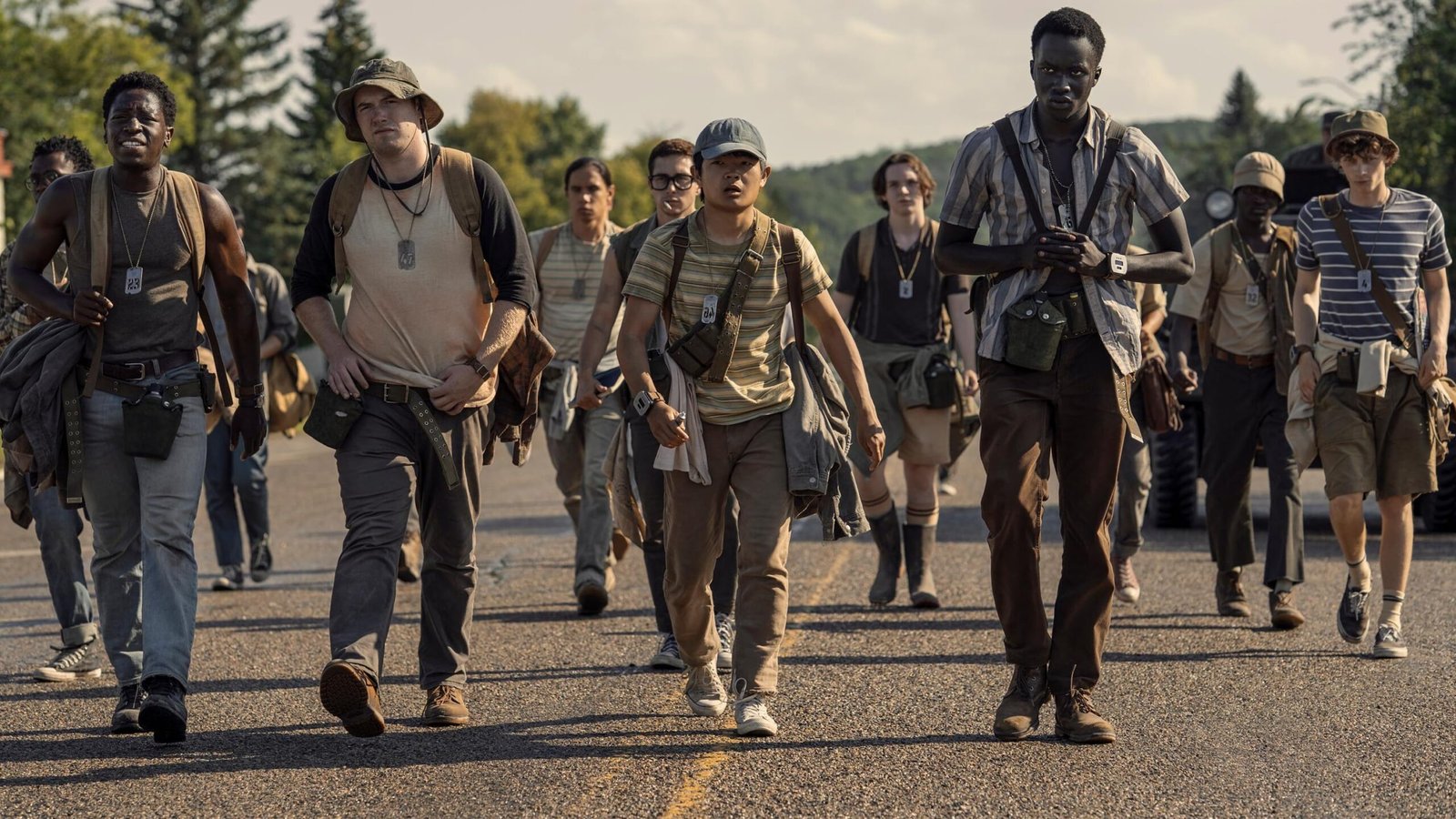
The film follows 50 young adults who are forced to participate in a grueling endurance test, where they must continuously walk at a pace of 3 miles per hour (approximately 5.5 km/h) until only one survivor remains. The stakes are high, as the winner is granted the fulfillment of a single wish, while the losers are summarily executed.
This premise, which is a departure from the novel’s 100 participants, serves to heighten the sense of claustrophobia and intensity within the film. By focusing on a smaller group of characters, director Francis Lawrence is able to delve deeper into their individual stories and the emotional toll of the competition, creating a more intimate and visceral viewing experience.
Crafting the Cinematic Experience
One of the key challenges in adapting The Long Walk to the screen was translating the relentless, almost meditative nature of the novel’s central conceit – a seemingly endless march towards an uncertain fate. Francis Lawrence, known for his work on the Hunger Games franchise, has proven himself adept at capturing the essence of dystopian narratives, and his approach to The Long Walk is no exception.
The director’s keen eye for visual storytelling is evident throughout the film, as he masterfully constructs a sense of place and atmosphere that mirrors the characters’ physical and emotional journeys. The vast, desolate landscapes serve as a backdrop to the characters’ struggle, with the camera often lingering on the monotonous, repetitive nature of the march, emphasizing the sheer endurance required of the participants.
Complementing the visual style is the emphasis on the natural sounds of the march – the rhythmic footsteps, the labored breathing, the occasional gunshot – rather than a traditional melodramatic score. This choice helps to create a sense of immediacy and authenticity, drawing the viewer deeper into the characters’ collective suffering.
Exploring the Characters and Their Arcs
At the heart of The Long Walk are the four main characters – Raymond, Ollie, Barkovitch, and Majorie – each of whom represents a different facet of the human experience in the face of such extreme adversity.
Raymond (played by Cooper Hoffman) is the central protagonist, a young man whose initial reluctance and uncertainty gradually gives way to a steely determination to survive. Hoffman’s nuanced performance captures the character’s emotional journey, from the initial shock of being thrust into the competition to the gradual hardening of his resolve.
Ollie (David Jonsson) serves as Raymond’s closest ally, a steadfast companion who provides both moral support and a pragmatic approach to the challenges they face. Jonsson’s portrayal of Ollie is a standout, imbuing the character with a quiet strength and empathy that resonates throughout the film.
Barkovitch (Garrett Wareing) represents the more ruthless and self-serving side of human nature, willing to do whatever it takes to emerge victorious. Wareing’s intense performance adds an unsettling edge to the character, highlighting the moral compromises the participants are forced to make.
Majorie (Alexa Demie) is the lone female participant, whose presence adds an additional layer of complexity to the narrative. Demie’s portrayal of Majorie is a study in nuance, as she navigates the challenges of being a woman in a male-dominated competition while also grappling with her own motivations and desires.
The film’s focus on these four characters allows for a deeper exploration of the collective experience, as they navigate the physical and emotional toll of the march. The director’s choice to shift the age range of the participants from the novel’s 13-18 years to adults over 18 also helps to add a level of maturity and complexity to the characters’ arcs, as they are forced to confront the harsh realities of their situation.
Adapting the Source Material
One of the key challenges in bringing The Long Walk to the screen was the need to translate the novel’s introspective and psychological elements into a cinematic format. The original novel was deeply rooted in the author’s own experiences and reflections on the Vietnam War draft, and the film adaptation had to find a way to capture the essence of these themes without becoming overly didactic or heavy-handed.
In this regard, the film’s screenwriter, Jay Molner, has done an admirable job of streamlining the narrative while still preserving the core thematic elements. The decision to reduce the number of participants from 100 to 50, for example, helps to create a more focused and intimate storytelling experience, allowing the audience to connect more deeply with the characters and their individual struggles.
Additionally, the film’s exploration of the authoritarian figure of the Major (played by Mark Hamill) is a notable departure from the novel, where the character was more of a symbolic representation of the oppressive system. In the film, the Major is given a more prominent role, serving as a tangible embodiment of the dystopian regime that governs the competition.
While some purists may argue that these changes dilute the original novel’s more abstract and philosophical elements, the film’s approach ultimately serves to heighten the sense of immediacy and visceral impact. By grounding the narrative in the characters’ personal experiences, the film is able to explore the broader themes of power, control, and the human condition in a more accessible and impactful way.
The Lasting Impact of The Long Walk
Stephen King’s works have long been the subject of numerous adaptations, with varying degrees of success. The Long Walk, in particular, has been a challenging prospect for filmmakers, with several previous attempts failing to come to fruition.
However, with Francis Lawrence’s assured direction and the talented ensemble cast, The Long Walk stands out as a compelling and thought-provoking addition to the canon of King adaptations. The film’s ability to capture the relentless, almost meditative nature of the original novel, while also infusing it with a sense of urgency and emotional resonance, is a testament to the creative team’s skill and vision.
Beyond the immediate cinematic experience, The Long Walk also serves as a timely and relevant exploration of the themes of authoritarianism, control, and the human cost of such systems. In a world increasingly grappling with the complexities of power and the erosion of individual freedoms, the film’s dystopian setting and the characters’ struggle for survival take on an added layer of significance.
As I mentioned earlier, I’m a longtime fan of Stephen King’s work, and I’ve been following the various adaptations of his stories with a keen eye. While some have fallen short, The Long Walk stands out as a remarkable achievement, one that not only honors the spirit of the original novel but also manages to craft a cinematic experience that is both gripping and thought-provoking.
If you’re a fan of Stephen King’s writing or simply appreciate well-crafted dystopian narratives, I highly recommend checking out The Long Walk. And be sure to follow me on Instagram and X (Twitter) for more updates and insights on the world of film and literature.
Thank you for joining me on this journey through the dystopian world of The Long Walk. I hope this in-depth analysis has provided you with a deeper appreciation for this remarkable adaptation and the enduring legacy of Stephen King’s literary genius.
About the Author