Edge of Tomorrow
When it comes to mind-bending science fiction films, few can match the sheer depth and complexity of “Edge of Tomorrow.” This cinematic gem, based on the Japanese light novel “All You Need Is Kill” by Hiroshi Sakurazaka, has captivated audiences worldwide with its intricate plot, philosophical undertones, and seamless blend of action, humor, and time-bending narratives.
As a self-proclaimed geek and avid film enthusiast, I’ve thoroughly researched every aspect of this remarkable movie, and I can confidently say that it’s a true brain-blow. From direct references to the First and Second World Wars to philosophical and mathematical concepts, ancient cultures, and various scientific theories, “Edge of Tomorrow” is a veritable treasure trove of hidden meanings and layers of depth.
In this mega analysis, we’ll dive deep into the rich tapestry of this film, exploring the origins of its story, the significance of its symbols and references, and the profound implications it holds for our understanding of time, destiny, and the human condition. So, strap in, fellow nerds, as we embark on a journey to uncover the secrets of “Edge of Tomorrow.”
From Manga to the Silver Screen: The Adaptation Journey

One of the fascinating aspects of “Edge of Tomorrow” is that it’s not a completely original story. In fact, the script was based on a manga by Hiroshi Sakurazaka, titled “All You Need Is Kill.” While the film adaptation kept a few key characters, such as Cage (known as Kiriya Keiji in the manga) and Rita (also called Rita Vrataski), it diverged from the source material in many ways.
Despite the changes, the author of the original work, Hiroshi Sakurazaka, enjoyed the cinematic adaptation, which is a testament to the filmmakers’ ability to capture the essence of the story while putting their own unique spin on it. This blending of Eastern and Western storytelling traditions adds an extra layer of depth and cultural richness to the film.
Echoes of the Past: World War References in “Edge of Tomorrow”
From the very beginning of the film, we’re introduced to significant historical references that set the stage for the events to come. The news reports at the start of the movie discuss the key events that led to the alien invasion, including the meteor crash that was the catalyst for the conflict, as well as the victory in the Battle of Verdun, which was essential to the fame of the combatant Rita.
The name “Battle of Verdun” is a direct nod to the First World War, as the real-life Battle of Verdun was one of the most important, longest, and bloodiest battles on the Western Front during that conflict. Just like in the film, the battle in the movie was a trench war, further reinforcing the parallels to the historical event.
Moreover, the premiere of “Edge of Tomorrow” in the United States on June 6, 2014, was no coincidence. That date marked the 70th anniversary of the Normandy Invasion, also known as D-Day, a pivotal moment in the Second World War. This symbolic connection to the Allied troops’ landing in France during WWII adds an extra layer of significance to the film’s narrative and setting.
A Unified Earth: The Challenges of a Global Military Force
One of the unique aspects of “Edge of Tomorrow” is the presence of a unified Earth military force, the United Defense Force (UDF), which stands in contrast to the typical depiction of the American army saving the world in many alien invasion movies.
This global military structure raises interesting questions about the feasibility and challenges of such a unified approach to planetary defense. After all, the Earth is divided into nations, each with its own economic, political, and military interests. The film’s portrayal of a cohesive UDF, with members from the United States, United Kingdom, Russia, Canada, and China, among others, presents a thought-provoking exploration of the potential and limitations of international cooperation in the face of a common threat.
The Exoskeletons: Blending Science Fiction and Reality
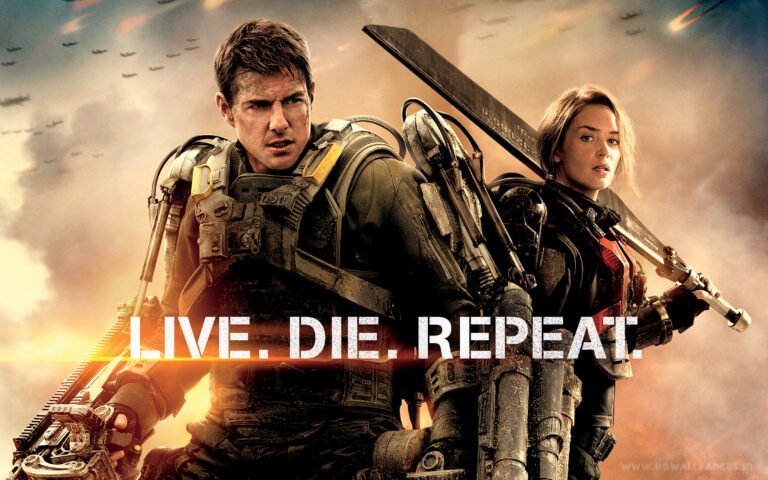
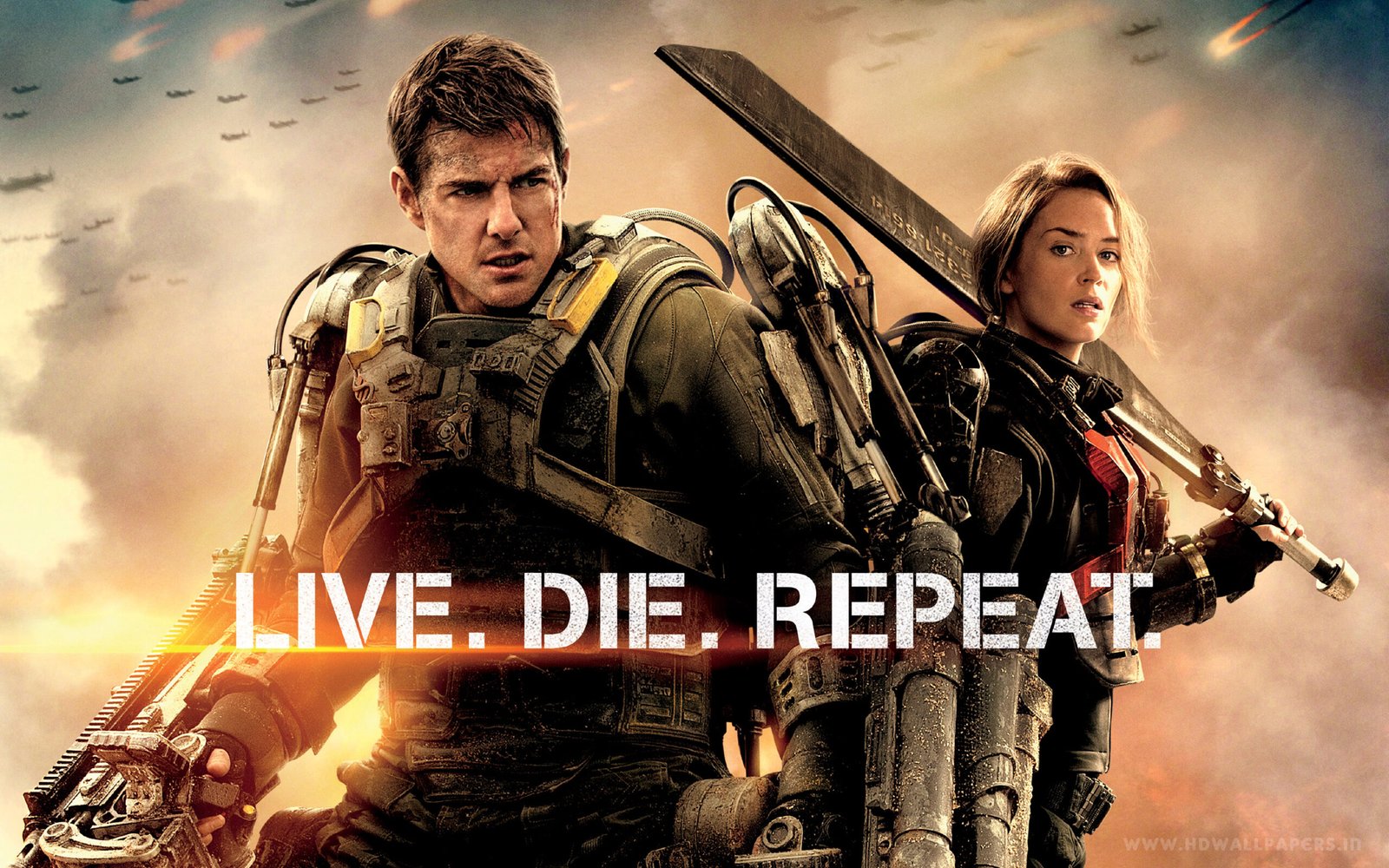
Another standout feature of “Edge of Tomorrow” is the military exoskeletons worn by the soldiers. These advanced suits, which weighed a staggering 40 kilograms, were a key element in the film’s action sequences, and they were a point of pride for the production team.
Tom Cruise, who both starred in and produced the film, insisted that the exoskeletons be real, with no computer-generated effects used.
Emily Blunt, who played the role of Rita, underwent intensive Krav Maga and yoga training to prepare for the physical demands of using the exoskeletons during filming.
In the real world, military exoskeletons are already a reality, with countries like Taiwan and the United States actively investing in the development of this technology to enhance soldier capabilities and facilitate military operations.
The filmmakers’ attention to detail and commitment to realism in the portrayal of these futuristic suits not only added authenticity to the on-screen action but also highlighted the rapid advancements in robotics, biomedicine, and other scientific fields that are shaping the future of warfare.
Trafalgal Square Landing: A Logistical Feat
One of the most impressive feats of the film’s production was the landing scene in Trafalgal Square in London. This sequence, which appears at the beginning and end of the movie, required an extensive logistical effort to pull off.
The production team had to obtain approval from various official bodies and local residents to empty eight blocks around Trafalgal Square for the filming, which lasted for 3 hours and involved 11 cameras.
The helicopter used in the scene was an official Royal Air Force workship, flown by real soldiers, and it had never landed in Trafalgal Square, even during wartime.
The feat of landing a helicopter in this iconic London location was a first, adding to the impressive technical achievements of the film’s production team.
This level of attention to detail and commitment to realism is a hallmark of “Edge of Tomorrow,” as the filmmakers sought to ground the fantastical elements of the story in a tangible, believable world.
Operation Downfall: A Real-Life Military Plan
As Cage is introduced to the UDF’s military operations, he learns about “Operation Downfall,” a plan to invade Japan during World War II. This is a direct reference to a real-life military operation that was planned by the United States but ultimately abandoned in favor of the atomic bombings of Hiroshima and Nagasaki.
The name “Operation Downfall” is a fitting choice, as it literally means “destruction” or “collapse,” which aligns with the film’s themes of time, power, and the struggle for survival against a formidable alien enemy. By drawing on this historical context, the filmmakers add depth and resonance to the narrative, further blending the fantastical with the grounded realities of warfare.
The UDF Coat of Arms: Symbols of Unity and Power
Throughout the film, we’re introduced to the UDF’s distinctive coat of arms, which is adorned with various symbols that hold deeper meanings. Let’s dive into the significance of these elements:
The Eagle: Representing wisdom, leadership, and power, the eagle’s open-winged stance conveys a sense of active defense and readiness to attack.
The Planet: Stylized to resemble the Earth without distinct continental borders, this symbol represents the global unity and the human race’s fight as one against the alien threat.
The Star: Reinforcing the idea of unity, the star on the UDF coat of arms symbolizes the coming together of humanity in the face of a common enemy.
The Circle: Enclosing the entire design, the circle represents the concept of unity, protection, and the endless cycle of time that is central to the film’s narrative.
By delving into the rich symbolism of the UDF’s insignia, we gain a deeper understanding of the film’s themes and the filmmakers’ attention to detail in crafting a cohesive and meaningful visual language.
Desertion and the Consequences of Refusal
When Cage is arrested and accused of desertion, the film explores the serious implications of abandoning one’s military duties during a time of war. Desertion is considered a grave offense in most military codes, as it undermines the foundations of discipline, respect for authority, and the willingness to serve.
The film’s portrayal of Cage’s reluctance to join the fight and his subsequent forced conscription into the battle highlights the complex moral and ethical dilemmas faced by individuals caught in the midst of a global conflict. By delving into the historical and legal context of desertion, the filmmakers add an extra layer of depth to the narrative, challenging the audience to consider the consequences of personal choices in the face of overwhelming circumstances.
The Mystical Significance of Cards and Gambling
In one of the film’s memorable scenes, the soldiers are caught playing cards, which is strictly forbidden by the general. This seemingly innocuous moment actually holds deeper symbolic meaning, as the filmmakers draw upon the mystical and esoteric associations of playing cards and gambling.
Playing cards, whether for entertainment or divination, have long been linked to the concept of fate and the belief in a supernatural force guiding events.
The general’s insistence that the soldiers focus solely on the war and reject any notion of a greater cosmic influence reflects an ideological model of autonomy, where the outcome of the battle is solely the responsibility of the soldiers and not subject to the whims of chance or destiny.
The punishment of forcing the soldiers to eat the cards they were playing with further reinforces the idea of devouring or overcoming fate, a theme that is deeply woven into the film’s exploration of time and the cyclical nature of existence.
By incorporating these esoteric references, the filmmakers tap into the collective unconscious and the universal human desire to understand our place in the grand scheme of things, adding an extra layer of depth and meaning to the narrative.
The Biology of the Mimetics: Decoding the Alien Threat
One of the key plot points in “Edge of Tomorrow” is the discovery of the three types of aliens, known as Mimetics: the drones, the Alphas, and the Omega. These designations are not arbitrary, as they hold significant symbolic and scientific meaning.
Drones: The most common type of Mimetic, the drones represent the idea of the “common” or “ordinary,” mirroring the concept of drone bees in the natural world.
Alphas: The rare and powerful Alphas are named after the first letter of the Greek alphabet, symbolizing their status as the leaders and originators of the Mimetic species.
Omega: The ultimate boss, the Omega, is named after the last letter of the Greek alphabet, representing the end, the final power, and the ultimate control over time.
By drawing on these Greek letter references, the filmmakers tap into the rich symbolism and scientific associations that these letters hold, further enhancing the depth and complexity of the Mimetic biology and its connection to the film’s central themes of time, power, and the struggle for survival.
Temporal Loops and the Eternal Return
At the heart of “Edge of Tomorrow” lies the concept of the time loop, where Cage repeatedly experiences the same day, dying and returning to the beginning. This narrative device is not unique to this film, but the way it is explored and integrated into the story is truly remarkable.
The film’s use of the time loop concept is heavily influenced by the theories of German scientist Kushi Lien, who proposed the idea of a temporal loop in 1964. According to this theory, time runs normally for a period, but then resets to the starting point, creating a continuous cycle of repetition.
Additionally, the film’s exploration of the time loop is closely tied to the philosophical concept of the “Eternal Return” proposed by Friedrich Nietzsche. This idea suggests that the universe is in a constant state of flux, with successes and failures endlessly rearranging themselves in an attempt to achieve a balance that can never be attained. Cage’s repeated attempts to alter the course of events and ultimately defeat the Omega can be seen as a metaphor for this endless cycle of the Eternal Return.
By weaving these complex philosophical and scientific ideas into the narrative, the filmmakers of “Edge of Tomorrow” have created a thought-provoking exploration of the nature of time, destiny, and the human experience, challenging the audience to ponder the implications of living in an eternal loop.
Symbols of Infinity and the Collective Unconscious
Throughout the film, the filmmakers have incorporated a rich tapestry of symbols and archetypes that tap into the collective unconscious of humanity. One of the most prominent of these is the image of the Ouroboros, the ancient symbol of a serpent devouring its own tail, representing the cycle of life, death, and eternal return.
This symbol, which has appeared in various cultures and belief systems throughout history, from ancient Egypt to alchemy and Aztec mythology, serves as a powerful metaphor for the film’s central themes of time, infinity, and the cyclical nature of existence. Just as the Ouroboros represents the endless cycle of creation and destruction, Cage’s repeated experiences of dying and returning to the same day mirror this eternal loop.
By drawing on these deeply rooted archetypal symbols, the filmmakers of “Edge of Tomorrow” tap into the collective unconscious of the audience, resonating with a primal understanding of the human experience and the mysteries of the universe. This integration of universal symbols and mythological references adds an extra layer of depth and resonance to the film’s narrative, inviting the audience to ponder the profound questions it raises about the nature of time, fate, and the human condition.
Unlocking the Secrets of “Edge of Tomorrow”
In the end, “Edge of Tomorrow” is a cinematic masterpiece that seamlessly blends science fiction, action, and philosophical exploration. By delving into the rich tapestry of historical references, scientific theories, and universal symbols, the filmmakers have created a truly immersive and thought-provoking experience that challenges the audience to see the world in a new light.
From the direct nods to the World Wars to the exploration of the collective unconscious and the mysteries of time, this film is a treasure trove of hidden meanings and layers of depth. As a content creator, I’m honored to have the opportunity to share this in-depth analysis with you, my fellow nerds. If you’re craving more mega analyses like this one, be sure to let me know in the comments below which film you’d like us to explore next.
And don’t forget to check out the links to support our channel and stay up-to-date on all the latest nerdy content. Let’s continue to dive deep into the world of cinema and uncover the secrets that lie beneath the surface. Until next time, may the power of time be with you!
About the Author