Dark City
I think in the ever-evolving landscape of science fiction cinema, there are films that manage to transcend the boundaries of their genre, offering audiences a truly immersive and thought-provoking experience. One such cinematic gem is “Dark City,” a 1998 neo-noir masterpiece directed by the visionary Alex Proyas. Despite its initial struggles at the box office, this film has since garnered a devoted cult following and is widely regarded as a seminal work in the realm of cerebral science fiction.
A Forgotten Gem in the Shadow of Blockbusters
Dark City (1998) had the misfortune of being released in the wake of the colossal success of Titanic (1997) and just a year before the groundbreaking The Matrix (1999) This timing, coupled with the film’s cerebral and unconventional approach to storytelling, meant that it struggled to find its audience at the time of its release, stalling at a mere $14 million domestically.
“Dark City” is a “masterpiece” – a “truly evocative sci-fi tale with a cerebral bent” that deserves far more recognition than it has received. Unlike the action-packed spectacle of The Matrix, “Dark City” takes a more introspective and philosophical approach, delving deep into the nature of identity, memory, and the human condition.
A Captivating Narrative and Unforgettable Visuals
The film’s narrative follows the story of John Murdoch (played by the talented Rufus Sewell), a man who wakes up in a bathtub with no memory and a dead prostitute by his side. My description of the plot captures the film’s intriguing premise:
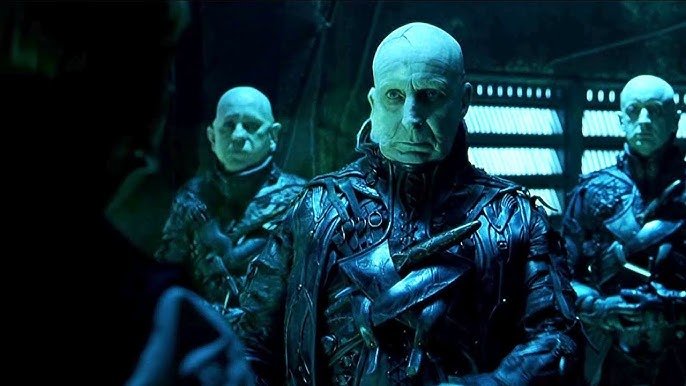
“He’s being pursued by an army of pale bald men in trench coats who have incredible telekinetic powers, but guess what – he has some of those powers too and knows that despite all the evidence to the contrary, he’s not a killer.”
As the story unfolds, Murdoch discovers that the city he inhabits is not what it seems, and that he is part of a grand experiment orchestrated by a group of mysterious beings known as the “Strangers.” The film’s exploration of these themes, combined with its striking visual style, creates a truly captivating and immersive experience for the viewer.
Proyas’ Masterful Direction and the Talented Cast
One of the key strengths of “Dark City” is the exceptional direction of Alex Proyas, who had previously helmed the cult classic “The Crow.” For me the film is “something of a masterpiece” and that it features “a terrific sense of style and pace.”
Proyas’ attention to detail and his ability to craft a visually stunning world are evident throughout the film. The production design, with its timeless, film noir-inspired aesthetic, is a standout element, creating a sense of unease and disorientation that perfectly complements the narrative.
The cast of “Dark City” is equally impressive, I must highlight the performances of Rufus Sewell, Jennifer Connelly, William Hurt, and the memorable Kiefer Sutherland. For me, Rufus Sewell delivers a nuanced and captivating performance as the ordinary hero who must navigate the surreal and disturbing world he finds himself in.
The Influence and Legacy of “Dark City”
“Dark City” has gone on to become a highly influential and respected work within the science fiction genre. The film was shot in many of the same locations as “The Matrix,” and the two movies share a number of thematic and stylistic similarities.
“Dark City” is a more cerebral and closed-ended tale, with a focus on exploring the nature of identity and memory, rather than the action-heavy spectacle of “The Matrix.” This unique approach has earned the film a dedicated following, with many critics and fans recognizing it as a true masterpiece of the genre.
Exploring the Themes of Identity and Memory
At the heart of “Dark City” is a profound exploration of the nature of identity and memory. The film’s central character, John Murdoch, finds himself grappling with the question of who he is and what his place is in the world he inhabits.
The film’s antagonists, the “Strangers,” have the ability to manipulate the city and its inhabitants, erasing their memories and implanting new ones. This concept of the malleability of identity and the fragility of memory is a central theme that resonates throughout the film.
My description of the film’s narrative highlights this theme, noting that Murdoch “knows that despite all the evidence to the contrary, he’s not a killer.” This struggle to reconcile one’s perceived identity with the truth of one’s nature is a powerful and thought-provoking element of the film.
The Enduring Legacy of “Dark City”
“Dark City” has continued to captivate and inspire audiences and filmmakers alike. The film has gained a devoted “cult following,” with many recognizing it as a “lost gem of its time” that is “well worth diving into.”
The film’s influence can be seen in the work of subsequent science fiction filmmakers, who have drawn inspiration from its unique visual style, its cerebral approach to storytelling, and its exploration of the human condition. “Dark City” is a “great film with great performances all around and it is absolutely striking.”
For those who have yet to discover the wonders of “Dark City,” viewers can find a wealth of content related to the film and other cinematic gems in my YouTube channel.
A Timeless Masterpiece Worthy of Rediscovery
In the ever-evolving landscape of science fiction cinema, “Dark City” stands as a timeless masterpiece that deserves to be rediscovered and celebrated. With its captivating narrative, striking visual style, and profound exploration of the human condition, the film offers a truly immersive and thought-provoking experience for viewers.
As I said, “Dark City is a totally wonderful movie and if you haven’t seen it, well worth checking out.” For those who have yet to experience the magic of this cinematic gem, the time has come to dive into the world of “Dark City” and discover why it is considered one of the best movies you’ve never seen.
About the Author