Thirty years ago, a little film called Pulp Fiction hit theaters and forever changed the landscape of independent cinema. Directed by the visionary Quentin Tarantino and featuring an all-star cast including John Travolta, Samuel L. Jackson, Uma Thurman, and Bruce Willis, this nonlinear crime drama captivated audiences and critics alike, going on to become one of the most iconic and influential films of the 1990s.
In the three decades since its release, Pulp Fiction has only grown in stature, cementing Tarantino’s reputation as a cinematic auteur and continuing to inspire filmmakers, scholars, and fans around the world. As we celebrate this landmark anniversary, let’s take a deep dive into the making of Pulp Fiction, explore its lasting impact on independent cinema, and unpack the myriad of themes, references, and cinematic techniques that make it such an enduring masterpiece.
From Shorts to a Cinematic Triumph
The origins of Pulp Fiction can be traced back to Tarantino’s earlier work with co-writer Roger Avery. The two had initially envisioned a series of interconnected crime-themed short films, but they soon realized the challenges of getting short-form content distributed and seen by audiences. As Tarantino explained, “The problem with shorts is that you don’t have the apparatus of distribution, and it’s hard to get people to engage and watch shorts in the cinema, outside of the festival circuit.”
This realization led Tarantino and Avery to evolve their idea into a trilogy of connected stories set in Los Angeles. When Tarantino sat down to write the screenplay for what would become Pulp Fiction, he drew inspiration from his time in Amsterdam, where he had been working on another project. The nonlinear structure and interweaving narratives that would become the film’s signature style began to take shape.
Navigating the Studio System
As Tarantino developed the script for Pulp Fiction, he encountered some resistance from the studio system. The film was originally set up at TriStar Pictures, but the studio had some concerns about Tarantino’s approach. For one, they felt the film’s $8 million budget was too low for a project that needed to have broad international appeal and box office success. The studio also wanted more creative control, including limiting the film’s depiction of drug use, particularly heroin.
Tarantino, however, was unwilling to compromise his vision. He ultimately parted ways with TriStar and took the project to Miramax, which had recently been acquired by Disney. This proved to be a pivotal decision, as Miramax embraced Tarantino’s bold, unconventional approach and provided the creative freedom he needed to bring Pulp Fiction to life.
One of Miramax’s key strategies was to minimize the upfront costs of the film by negotiating profit-sharing deals with the cast. Instead of paying the likes of Bruce Willis and Samuel L. Jackson exorbitant salaries, the studio offered them a percentage of the film’s box office and home video revenues. This not only allowed Pulp Fiction to be made on a relatively modest budget, but it also gave the actors a vested interest in the film’s success, which ultimately paid off handsomely.
A Postmodern Masterpiece
When Pulp Fiction hit theaters in 1994, it was immediately hailed as a groundbreaking work of postmodern cinema. Tarantino’s nonlinear storytelling, fragmented narrative, and eclectic mix of genres and tones were unlike anything audiences had seen before. The film seamlessly blended elements of crime drama, black comedy, and even elements of the Western and exploitation genres, creating a unique cinematic experience that was both highly entertaining and intellectually stimulating.
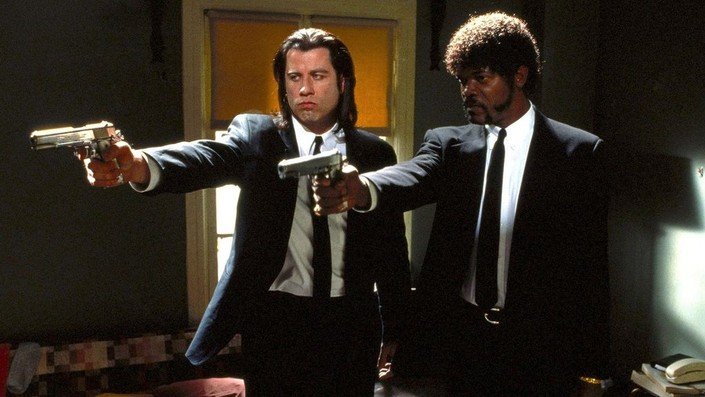
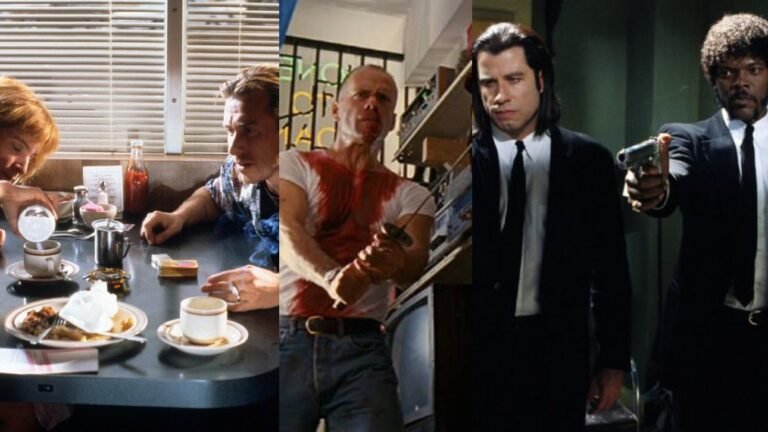
At the heart of Pulp Fiction are the intertwining stories of a pair of hitmen, Jules (Samuel L. Jackson) and Vincent (John Travolta), as well as a boxer named Butch (Bruce Willis) who double-crosses his mob boss, Marsellus Wallace (Ving Rhames). The film’s nonlinear structure allows Tarantino to jump back and forth in time, revealing key details and character backstories in a way that keeps the audience engaged and guessing.
One of the most iconic and memorable sequences in the film is the “Ezekiel 25:17” monologue delivered by Jules. In this scene, Jules recites a passage from the Bible before executing a group of criminals, using the divine text to justify his violent actions. This moment perfectly encapsulates the film’s exploration of moral ambiguity, as the audience is forced to grapple with the complex and often contradictory motivations of the characters.
The nonlinear structure of Pulp Fiction allows Tarantino to jump back and forth in time, revealing key details and character backstories in a way that keeps the audience engaged and guessing.
The film seamlessly blends elements of crime drama, black comedy, and even the Western and exploitation genres, creating a unique cinematic experience that is both highly entertaining and intellectually stimulating.
The “Ezekiel 25:17” monologue delivered by Jules is a standout moment that perfectly encapsulates the film’s exploration of moral ambiguity, as the audience is forced to grapple with the complex and often contradictory motivations of the characters.
Intertextuality and Pop Culture References
One of the hallmarks of Tarantino’s filmmaking style is his deep love and knowledge of cinema history, which he weaves into his work through a rich tapestry of intertextual references and homages. Pulp Fiction is no exception, as the film is littered with nods to classic films, genres, and cultural touchstones.
From the film’s title, which evokes the pulp magazines and paperback novels of the mid-20th century, to the various references to hamburgers and the “Royale with Cheese” (a nod to the differences in fast food terminology between the United States and Europe), Pulp Fiction is a cinephile’s delight, constantly rewarding viewers who are attuned to its many layers of meaning and significance.
Tarantino’s use of music in the film is also a masterclass in intertextuality. The soundtrack features a mix of classic rock, soul, and surf music, all of which serve to evoke specific moods and time periods, while also tapping into the collective cultural memory of the audience. The film’s iconic theme, “Misirlou” by Dick Dale, is a perfect example of this, as it immediately conjures images of the film’s gritty, stylized world.
Pulp Fiction is littered with nods to classic films, genres, and cultural touchstones, reflecting Tarantino’s deep love and knowledge of cinema history.
The film’s title evokes the pulp magazines and paperback novels of the mid-20th century, while references to hamburgers and the “Royale with Cheese” tap into cultural differences between the United States and Europe.
Tarantino’s use of music in the film is a masterclass in intertextuality, with a soundtrack that features a mix of classic rock, soul, and surf music to evoke specific moods and time periods.
The Enduring Legacy of Pulp Fiction
In the years since its release, Pulp Fiction has only grown in stature, cementing its place as one of the most influential and iconic films of the 1990s. The film’s impact on independent cinema cannot be overstated, as it demonstrated that a relatively low-budget project with a bold, unconventional approach could not only find critical acclaim but also achieve mainstream success.
Tarantino’s innovative storytelling techniques, his ability to blend genres and tones, and his deep reverence for cinematic history have all become hallmarks of his filmmaking style, inspiring countless other directors to push the boundaries of what is possible in the medium. Pulp Fiction has also sparked countless debates and theories, with fans and scholars alike continuing to unpack the film’s many layers of meaning and significance.
As we celebrate the 30th anniversary of Pulp Fiction, it’s clear that the film’s legacy continues to loom large over the world of cinema. Whether you’re a longtime fan or discovering the film for the first time, there’s no denying the enduring power and influence of this postmodern masterpiece. So why not revisit this cinematic classic and see for yourself why Pulp Fiction remains one of the most essential and unforgettable films of the 20th century?
About the Author