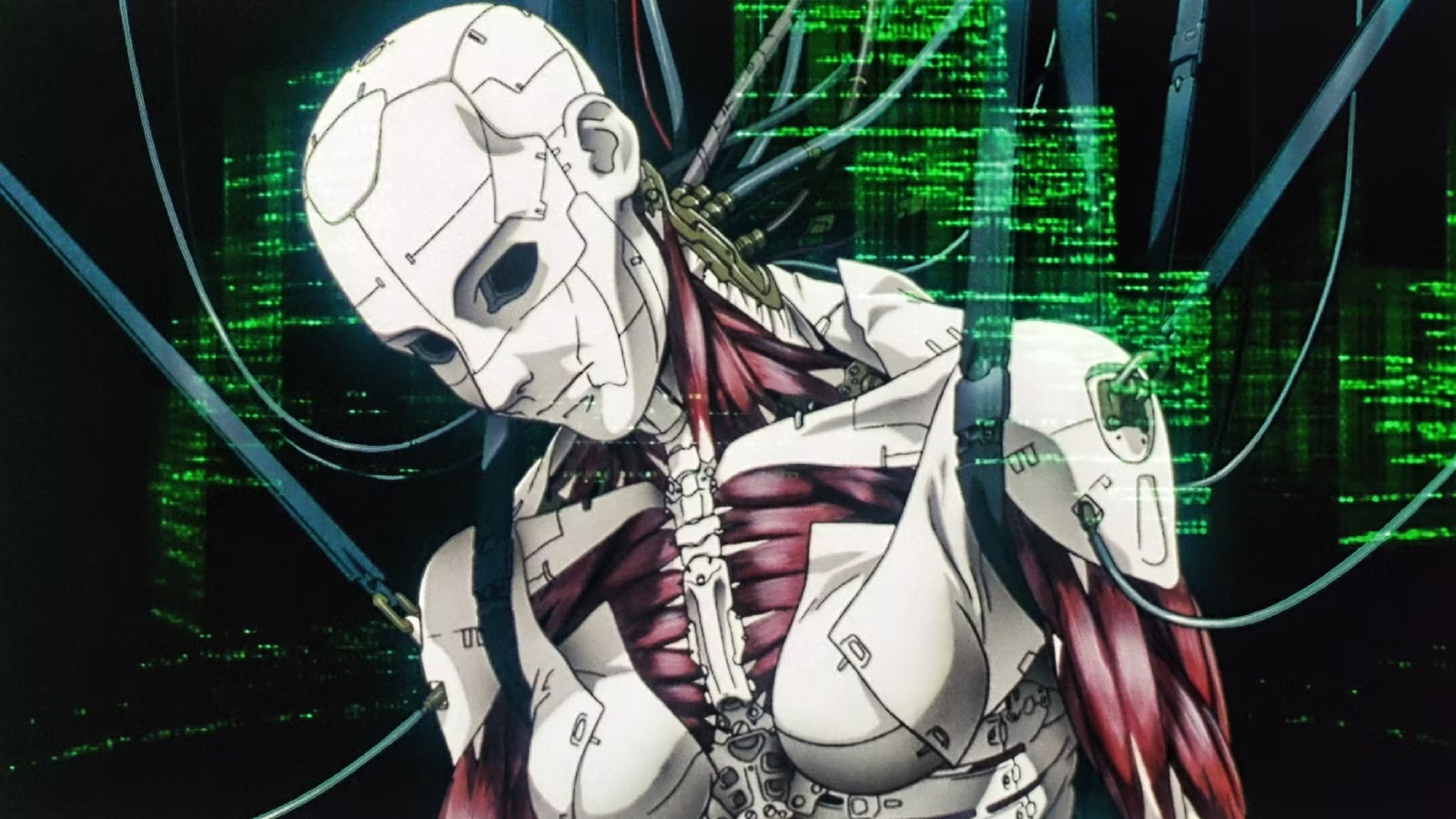
Ghost in the Shell
In a world where humans and technology converge, where the line between man and machine blurs, the classic anime “Ghost in the Shell” stands as a seminal work of science fiction. This 1995 film, adapted from the acclaimed manga by Masamune Shirow, delves into the very essence of what it means to be human in an increasingly digital age.
Set in the year 2029 in the bustling metropolis of New Port City, “Ghost in the Shell” presents a future where corporate conglomerates dominate the landscape and cybernetic enhancements have become commonplace. It is within this technologically advanced, yet morally complex, environment that we follow the exploits of the Public Security Section 9, a specialized task force led by the enigmatic Major Motoko Kusanagi.
Themes of Identity and Consciousness
At the heart of “Ghost in the Shell” lies a profound exploration of the nature of consciousness and identity. In a world where human brains are augmented with electronic components, known as “cyberbrains,” the very concept of the self becomes blurred. Motoko Kusanagi, the film’s protagonist, is a cyborg – a being with a cybernetic body and an organic brain. As she grapples with the implications of her own cybernetic nature, she begins to question the boundaries of her own identity.
The film delves into the philosophical conundrum of whether a person’s essence, their “ghost,” can truly be preserved and transferred between different physical forms. This concept is further explored through the character of the Puppet Master, a mysterious hacker capable of manipulating the cyberbrains of individuals, effectively erasing their memories and identities. The film poses the question: if a person’s memories and experiences can be so easily manipulated, what then defines their humanity?
Cyberpunk Aesthetics and Influences
“Ghost in the Shell” is widely regarded as a seminal work of cyberpunk fiction, a genre that explores the intersection of technology, society, and the human condition. The film’s visual style, characterized by its gritty, industrial aesthetic and neon-drenched cityscapes, has become a hallmark of the cyberpunk genre.
The influence of “Ghost in the Shell” can be seen in numerous other works of science fiction, most notably the groundbreaking film “The Matrix.” The Wachowskis, the directors of “The Matrix,” have openly acknowledged the impact of Mamoru Oshii’s anime on their own work, particularly in the film’s iconic “code rain” sequence and its exploration of the nature of reality and identity.
Beyond “The Matrix,” “Ghost in the Shell” has left an indelible mark on the broader landscape of science fiction. The film’s themes of technological integration, corporate dominance, and the blurring of human and machine have resonated with audiences and creators alike, inspiring a wealth of subsequent works in various media, from video games to live-action adaptations.
The Enduring Legacy of “Ghost in the Shell”
The impact of “Ghost in the Shell” extends far beyond its initial release in 1995. The film has become a touchstone for the cyberpunk genre, inspiring countless works of fiction, film, and video games. Its influence can be seen in the visual aesthetics, narrative themes, and philosophical explorations of numerous contemporary science fiction stories.
One of the most notable examples of “Ghost in the Shell’s” enduring legacy is the “Metal Gear” video game franchise, created by Hideo Kojima. The series, known for its complex narratives and exploration of themes related to technology, identity, and the nature of warfare, has drawn heavily from the cyberpunk sensibilities of Oshii’s anime.
Additionally, the character of Motoko Kusanagi has become an iconic figure in the world of science fiction, with numerous other works featuring protagonists that bear a striking resemblance to the Major, both in terms of their physical appearance and their grappling with questions of identity and humanity.
The legacy of “Ghost in the Shell” extends beyond the realm of entertainment, as the film’s themes and ideas have also found resonance in academic and philosophical discussions. The film’s exploration of the relationship between technology and the human condition has made it a subject of study in fields ranging from media studies to cognitive science.
Exploring the “Ghost in the Shell” Expanded Universe

For fans of “Ghost in the Shell” seeking to delve deeper into the franchise, there is a wealth of additional content available. Beyond the seminal 1995 film, the “Ghost in the Shell” universe has expanded to include a range of other media, each offering unique perspectives and narratives.
Anime Series: The “Ghost in the Shell: Stand Alone Complex” series, a 52-episode anime that explores the world of Section 9 in greater depth, offering a more action-oriented and comedic take on the franchise while still maintaining the philosophical underpinnings of the original film.
Sequel Films: The 2004 film “Ghost in the Shell 2: Innocence,” directed by Mamoru Oshii, serves as a direct sequel to the 1995 anime, delving deeper into the themes of identity and the nature of consciousness.
Live-Action Adaptation: The 2017 live-action film adaptation of “Ghost in the Shell,” starring Scarlett Johansson, has been the subject of much controversy and debate, with many fans criticizing the film’s departure from the source material. However, the film does offer some visually stunning sequences that pay homage to the original anime.
Manga and Novels: The “Ghost in the Shell” franchise has also expanded into the realm of manga and novels, with the original manga series by Masamune Shirow serving as the foundation for the anime adaptations, and additional stories and spin-offs exploring the wider “Ghost in the Shell” universe.
For those interested in exploring the “Ghost in the Shell” franchise further, the Geekorn Youtube channel and its associated social media channels, such as Facebook, X (Twitter), and Instagram, offer a wealth of information and resources on the series.
The Enduring Relevance of “Ghost in the Shell”
In the decades since its release, “Ghost in the Shell” has cemented its place as a seminal work of science fiction, a touchstone for the cyberpunk genre, and a profound exploration of the human condition in the face of technological advancement. Its themes of identity, consciousness, and the blurring of the line between man and machine continue to resonate with audiences and creators alike, inspiring a new generation of science fiction storytelling.
As we navigate an increasingly digital world, where the integration of technology into our lives becomes more pervasive, the questions and concerns raised by “Ghost in the Shell” have only grown more relevant. The film’s enduring legacy serves as a testament to the power of science fiction to not only entertain but to also challenge our assumptions and push us to confront the ethical and philosophical implications of our technological progress.
Whether you’re a longtime fan of the franchise or a newcomer to the world of “Ghost in the Shell,” the film and its expanded universe offer a rich and thought-provoking exploration of the human experience in the face of an ever-evolving technological landscape. It is a work that will continue to captivate and inspire audiences for generations to come.
About the Author








1 thought on “Ghost in the Shell Review: Cyberpunk’s Defining Classic”