As a content creator who has closely followed the historical significance of the Nuremberg Trials, I was eagerly anticipating the release of the new film “Nuremberg” directed by James Vanderbilt. Unfortunately, the final product turned out to be a major disappointment, failing to capture the gravity and importance of this landmark event in international justice.
In my video review, I expressed my frustration with the film’s lack of focus on the actual Nuremberg Tribunal proceedings, instead opting to center the story around a fictionalized relationship between a Nazi war criminal and a psychiatrist. While I understand the director’s desire to make the material more “accessible,” the end result is a muddled and unsatisfying portrayal that does a disservice to the real-life events and their lasting impact.
The Missed Opportunity of Nuremberg
The Nuremberg Trials were a pivotal moment in history, establishing crucial legal precedents and defining the concept of “crimes against humanity.” As someone who has studied this period extensively, including working with the “Blue Books” of Nuremberg during my doctoral research, I was hoping to see a film that would do justice to the complexity and significance of these proceedings.
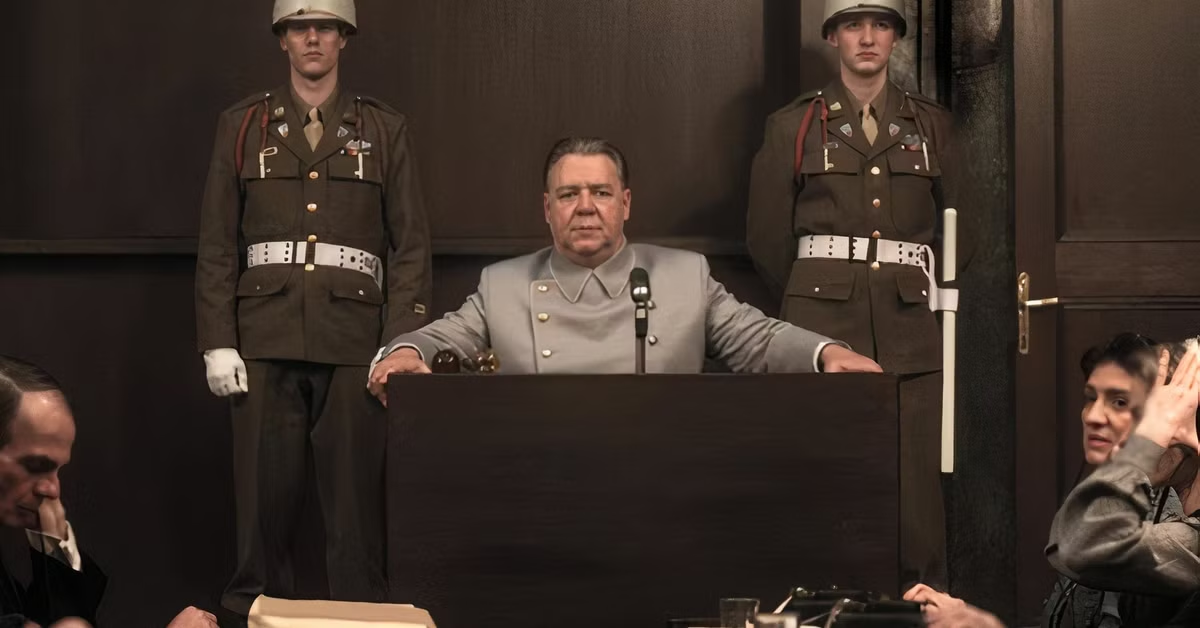
Unfortunately, “Nuremberg” falls short on several fronts. Rather than delving into the rich historical context and the diverse perspectives of the various nations involved in the trials, the film instead focuses narrowly on the relationship between Hermann Göring, played by Russell Crowe, and the psychiatrist tasked with evaluating him, portrayed by Rami Malek.
The Lack of Courtroom Drama
One of the most glaring issues with the film is its failure to capture the drama and importance of the actual Nuremberg Tribunal. Despite being a film ostensibly about this landmark event, there is shockingly little time spent within the courtroom itself. The director’s decision to prioritize the fictional relationship between Göring and the psychiatrist over the proceedings of the trial is a puzzling and disappointing choice.
As I mentioned in my video review, a film about the Nuremberg Trials should, at the very least, provide a basic overview of the key defendants and the different factions within the Nazi leadership. Instead, the film focuses disproportionately on Göring, neglecting to even mention important figures like Albert Speer, who publicly apologized for his actions during the trial.
The Mishandling of Historical Accuracy
Another major issue with “Nuremberg” is its casual disregard for historical accuracy. The film takes significant liberties with the facts, often in ways that undermine the gravity of the events. For example, the film completely dismisses the presence and contributions of the French, Soviet, and British representatives in the tribunal, reducing their roles to mere cameos.
Additionally, the film’s attempt to create a romantic subplot between Göring and the psychiatrist character is both historically inaccurate and tonally jarring. This kind of fictionalized embellishment feels like a betrayal of the real-life events and the victims of the Nazi regime.
Nuremberg: A Missed Opportunity for Meaningful Storytelling
As a content creator myself, I understand the desire to make historical material more accessible to a wider audience. However, in the case of “Nuremberg,” the director’s approach of prioritizing a fictional relationship over the actual events of the trial feels like a missed opportunity to craft a truly impactful and meaningful story.
The Nuremberg Trials were a pivotal moment in history, not only for their legal significance but also for their moral and ethical implications. The trials were a powerful statement against the atrocities of the Nazi regime, and they laid the groundwork for the modern concept of international justice.
The Importance of Nuremberg in Historical Context
The Nuremberg Trials were the culmination of years of planning and negotiation, dating back to the early stages of World War II. As early as the Casablanca Conference in 1943, the Allies had discussed the possibility of holding war crimes trials for Nazi leaders. This was further solidified at the Yalta Conference in 1945, where the decision was made to establish an International Military Tribunal to prosecute the major war criminals.
The trials themselves were a monumental undertaking, involving the participation of representatives from the United States, the United Kingdom, the Soviet Union, and France. The proceedings were meticulously documented, with the “Blue Books of Nuremberg” serving as a comprehensive record of the trials and the evidence presented.
Beyond the legal significance, the Nuremberg Trials also had a profound impact on the collective consciousness of the world. They served as a powerful statement against the horrors of the Holocaust and the systematic genocide carried out by the Nazi regime. The trials helped to establish the concept of “crimes against humanity,” a legal framework that would have lasting implications for international law and human rights.
The Missed Opportunity of “Nuremberg”
Given the historical importance and moral weight of the Nuremberg Trials, it is deeply disappointing that the film “Nuremberg” fails to capture the gravity of these events. Instead of delving into the complexities of the trial proceedings and the diverse perspectives of the various nations involved, the film opts to focus on a fictionalized relationship between Göring and a psychiatrist.
While the film does make some efforts to acknowledge the historical significance of the trials, such as the inclusion of archival footage and a powerful sequence depicting the horrors of the Nazi concentration camps, these moments feel like afterthoughts rather than the central focus of the narrative.
The director’s stated goal of making the material more “accessible” is understandable, but in this case, it has come at the expense of a meaningful and impactful exploration of the Nuremberg Trials and their lasting legacy. By prioritizing a fictional subplot over the historical realities, the film ultimately fails to do justice to the gravity and importance of this pivotal moment in history.
Nuremberg: A Missed Opportunity for Meaningful Dialogue
One of the most disappointing aspects of “Nuremberg” is its inability to engage in a meaningful dialogue about the ethical and moral implications of the trials. Instead of delving into the complex questions of justice, accountability, and the nature of evil, the film seems content to skim the surface, offering little in the way of substantive exploration or insight.
The Missed Opportunity for Nuanced Perspectives
The Nuremberg Trials were a complex and multifaceted event, with a wide range of perspectives and motivations at play. The film’s narrow focus on the relationship between Göring and the psychiatrist character fails to capture the diversity of viewpoints and the ongoing debates surrounding the trials.
For example, the film completely neglects to explore the differing approaches and priorities of the various nations involved in the tribunal. The American, British, French, and Soviet representatives all had their own agendas and concerns, and understanding these nuances is crucial to fully grasping the significance of the Nuremberg Trials.
Similarly, the film misses an opportunity to delve into the complex psychology and motivations of the Nazi defendants themselves. While the film does briefly touch on Göring’s defiant and manipulative nature, it fails to explore the deeper questions of how such atrocities could have been committed, and the various ways in which the defendants rationalized and justified their actions.
The Missed Opportunity for Meaningful Dialogue
By failing to engage in a meaningful dialogue about the ethical and moral implications of the Nuremberg Trials, the film ultimately falls short in its ability to truly honor the gravity of these events. The Nuremberg Trials were not just about establishing legal precedents; they were also about grappling with the fundamental questions of human nature, the nature of evil, and the responsibilities of those in positions of power.
A more thoughtful and nuanced exploration of these themes could have elevated “Nuremberg” from a mere historical drama into a powerful meditation on the human condition and the ongoing struggle for justice and accountability. Instead, the film settles for a superficial and unsatisfying portrayal that does a disservice to the real-life events and their lasting impact.
Nuremberg: A Missed Opportunity for Cinematic Excellence
While “Nuremberg” does have some positive elements, such as the attention to historical detail in the set design and costuming, as well as the inclusion of powerful archival footage, these strengths are ultimately overshadowed by the film’s fundamental flaws.
The Positive Aspects of “Nuremberg”
One of the film’s strongest aspects is its attention to historical detail in the set design and costuming. The recreation of the Nuremberg Tribunal courtroom is particularly impressive, with the filmmakers clearly putting in the effort to capture the authentic look and feel of the original proceedings.
Additionally, the film’s use of archival footage from the actual Nuremberg Trials is a powerful and effective choice. The inclusion of these real-life images and recordings serves as a stark reminder of the gravity of the events being depicted, and it helps to ground the film in the historical reality of the time.
Furthermore, Russell Crowe’s performance as Hermann Göring is a highlight of the film. Crowe manages to capture the complexity of Göring’s character, portraying him as both charismatic and manipulative, with a clear sense of the character’s own twisted sense of self-importance and delusion.
The Missed Opportunity for Cinematic Excellence
Despite these positive elements, “Nuremberg” ultimately falls short of the cinematic excellence that one might expect from a film tackling such a momentous historical event. The director’s decision to prioritize a fictional relationship over the actual proceedings of the trial is a fundamental flaw that undermines the film’s ability to truly engage the audience and do justice to the Nuremberg Trials.
Additionally, the film’s pacing and structure feel disjointed and uneven, with the narrative lurching between the courtroom scenes and the fictional subplot involving Göring and the psychiatrist. This lack of cohesion and focus makes it difficult for the audience to fully immerse themselves in the story and appreciate the gravity of the events being depicted.
Ultimately, “Nuremberg” represents a missed opportunity for cinematic excellence. With its impressive production values and the talent of its cast, the film had the potential to be a powerful and impactful exploration of one of the most significant events in modern history. Instead, it settles for a superficial and unsatisfying portrayal that fails to do justice to the real-life events and their lasting legacy.
The Enduring Importance of Nuremberg
Despite the shortcomings of the film “Nuremberg,” the real-life events of the Nuremberg Trials remain a crucial and enduring part of our collective history. The trials established important legal precedents, defined the concept of “crimes against humanity,” and served as a powerful statement against the horrors of the Nazi regime.
As a content creator, I believe it is essential to continue exploring and engaging with the Nuremberg Trials and their lasting impact. While the film “Nuremberg” may have fallen short, there are other resources available that can provide a more comprehensive and meaningful understanding of this pivotal moment in history.
Recommended Resources for Exploring Nuremberg
The 1961 film “Judgment at Nuremberg,” directed by Stanley Kramer, which offers a fictionalized but thoughtful exploration of the trials.
The “Blue Books of Nuremberg,” a comprehensive collection of the trial transcripts and evidence presented during the proceedings.
The book “The Nazi and the Psychiatrist” by Jack El-Hai, which inspired the film “Nuremberg” and provides a more in-depth look at the relationship between Göring and the psychiatrist who evaluated him.
My own YouTube channel and X (Twitter) account, where I continue to explore and discuss historical topics like the Nuremberg Trials.
By engaging with these resources and continuing to explore the Nuremberg Trials, we can ensure that the lessons and legacy of this pivotal moment in history are not forgotten. The Nuremberg Trials serve as a powerful reminder of the importance of justice, accountability, and the ongoing struggle to prevent such atrocities from occurring in the future.
While the film “Nuremberg” may have fallen short, the real-life events and their lasting impact remain a crucial part of our shared history. As content creators and engaged citizens, it is our responsibility to ensure that these stories are told with the gravity and nuance they deserve.
About the Author