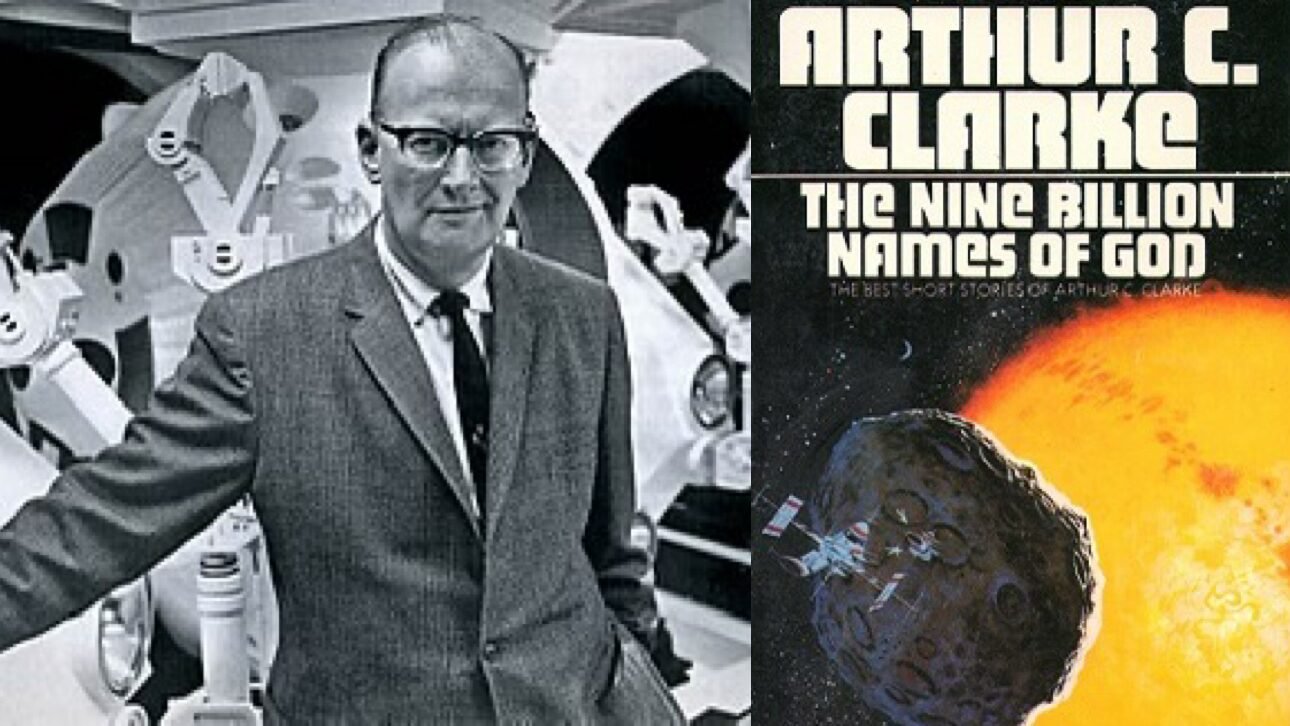
Arthur C. Clarke - The Nine Billion Names of God
In the vast expanse of the universe, where the mysteries of existence linger like the stars in the night sky, Arthur C. Clarke’s timeless short story “The Nine Billion Names of God” stands as a testament to the power of science fiction to explore the profound questions of our place in the cosmos. As one of the most celebrated authors in the genre, Clarke’s works have long captivated readers with their blend of scientific speculation, philosophical contemplation, and a deep reverence for the unknown.
Published in 1953, “The Nine Billion Names of God” is a story that delves into the intersection of faith, technology, and the ultimate fate of humanity. It is a tale that challenges our preconceptions, invites us to ponder the nature of existence, and leaves us with a haunting sense of wonder in the face of the unknowable.
The Monastic Quest for the Names of God
The story begins with a curious request from a group of Tibetan monks to a scientist named Dr. Wagner. The monks seek a modified version of the Mark 5, an automatic sequence computer, capable of handling operations involving up to nine letters. Their purpose, they reveal, is to compile a list of all the names of God, which they believe to be approximately nine billion in number.
This monumental task, the monks explain, has been the focus of their monastery for centuries. They believe that by systematically permutating the letters of a specially developed alphabet, they can uncover the true names of the divine. Intrigued, Dr. Wagner agrees to provide the monks with the modified computer and two engineers to assist them in their endeavor.
As the story unfolds, we are introduced to the two scientists, George Henley and Chuck, who are tasked with overseeing the project. They are initially skeptical of the monks’ beliefs, viewing the task as a futile exercise in the face of their scientific worldview. However, as the project progresses and the computer tirelessly generates thousands of pages of potential divine names, the scientists begin to grapple with the implications of what they are witnessing.
The Clash of Science and Faith
One of the central themes of “The Nine Billion Names of God” is the tension between science and faith. Clarke masterfully weaves these two perspectives together, creating a narrative that challenges the reader to consider the limitations of both.
On the one hand, the scientists represent the rational, empirical approach to understanding the world. They are skeptical of the monks’ beliefs, viewing the task as a meaningless exercise in the face of their scientific knowledge. They struggle to reconcile the monks’ spiritual convictions with their own understanding of the universe.
On the other hand, the monks embody a deep-rooted faith in the divine and a belief that there is a higher purpose to their endeavor. They are convinced that by uncovering the names of God, they will fulfill the purpose of humanity and bring about the end of the world as we know it.
This clash of perspectives is not presented as a simple binary, but rather as a complex interplay of ideas. Clarke invites the reader to consider the merits and limitations of both the scientific and the spiritual worldviews, and to ponder the possibility of a reality that transcends the boundaries of our understanding.
The Silence of the Cosmos
As the story reaches its climactic conclusion, the scientists, having decided to leave the monastery before the project’s completion, find themselves on a mountaintop, gazing up at the night sky. It is here that they witness a profound and unsettling event – the stars begin to disappear, one by one, in utter silence.
This haunting image, described by Clarke with a masterful touch, serves as a powerful metaphor for the mysteries of the universe. The scientists, who had initially dismissed the monks’ beliefs as the ravings of the faithful, are now confronted with a phenomenon that defies their scientific understanding.
The silence of the cosmos, as the stars blink out, evokes a sense of cosmic terror and a profound sense of the unknown. It is a moment that challenges the very foundations of the scientists’ worldview and leaves them grappling with the possibility that there are realities beyond the scope of their knowledge.
This ending, which has been described by many as a “cosmic horror,” is a testament to Clarke’s ability to tap into the deepest fears and fascinations of the human psyche. It is a reminder that the universe is vast, mysterious, and ultimately beyond our complete comprehension.
Exploring the Mysteries of Existence
At its core, “The Nine Billion Names of God” is a story that invites the reader to ponder the nature of existence and the role of humanity within the grand scheme of the cosmos. Through the interplay of science and faith, Clarke presents us with a thought-provoking exploration of the fundamental questions that have haunted humanity for centuries.
One of the key themes that emerges from the story is the idea of purpose and the search for meaning. The monks, in their quest to uncover the names of God, believe that they are fulfilling a divine purpose – a belief that challenges the scientists’ more pragmatic and materialistic worldview.
This tension between the spiritual and the scientific is further explored in the way Clarke integrates the two perspectives. The scientists, who initially dismiss the monks’ beliefs as irrational, are ultimately confronted with a phenomenon that defies their understanding. This, in turn, leads them to question the limits of their own knowledge and the possibility of realities that exist beyond the confines of their scientific paradigm.
In this way, “The Nine Billion Names of God” becomes a meditation on the nature of the unknown and the human desire to make sense of the world around us. It invites the reader to consider the possibility that there are aspects of the universe that may forever remain beyond our grasp, and that the true nature of existence may be far more complex and mysterious than we can ever fully comprehend.
Connections to Clarke’s Other Works
The themes and ideas explored in “The Nine Billion Names of God” are not unique to this particular story. In fact, they are echoed in many of Arthur C. Clarke’s other renowned works, such as “2001: A Space Odyssey” and “Childhood’s End.”
In “2001: A Space Odyssey,” for example, Clarke grapples with the idea of humanity’s transformation and the role of the mysterious monolith in guiding that transformation. The story explores the notion of a higher purpose or intelligence that transcends our understanding, much like the monks’ belief in the divine names of God.
Similarly, in “Childhood’s End,” Clarke delves into the concept of humanity’s evolution and the potential for a higher state of being. The story presents a vision of the future where humanity is confronted with the possibility of transcending its current limitations and becoming something greater.
Explore more of Arthur C. Clarke’s works by checking out our membership options and staying connected through our social media channels.
These thematic connections underscore the depth and breadth of Clarke’s exploration of the human condition in the face of the unknown. His works consistently challenge us to expand our horizons, to question our assumptions, and to embrace the possibility of realities that exist beyond the limits of our current understanding.
The Enduring Legacy of “The Nine Billion Names of God”
In the decades since its initial publication, “The Nine Billion Names of God” has cemented its place as a classic of science fiction literature. Its enduring popularity and critical acclaim are a testament to the power of Clarke’s storytelling and the timeless nature of the questions it raises.
The story’s ability to captivate readers and spark deep contemplation is a testament to the author’s skill in weaving together the threads of science, faith, and the mysteries of the universe. It is a work that continues to resonate with audiences, inspiring new generations of readers to explore the boundaries of their own understanding and to embrace the wonder of the unknown.
As we continue to grapple with the profound questions of our existence and our place in the cosmos, “The Nine Billion Names of God” stands as a shining example of the transformative power of science fiction. It is a story that challenges us to look beyond the limits of our own perspectives, to embrace the possibility of realities that transcend our comprehension, and to find solace in the silence of the cosmos.
For more insights and discussions on classic science fiction stories, be sure to subscribe to my Youtube channel and follow us on our social media platforms.
About the Author