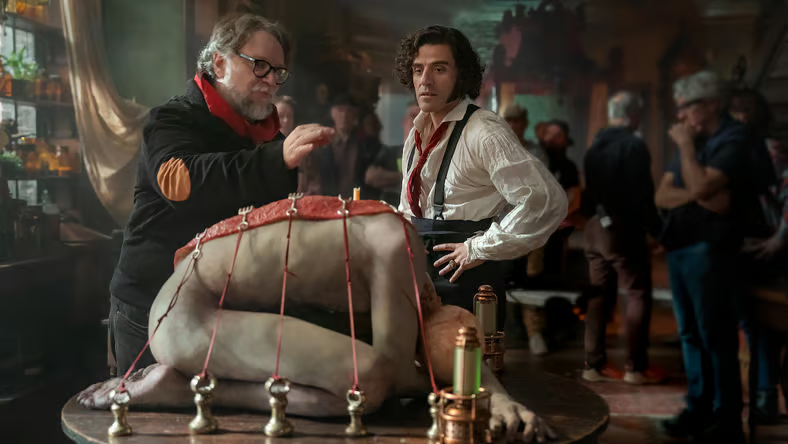
Guillermo del Toro, the acclaimed Mexican filmmaker known for his visually stunning and thematically rich works, has finally brought his long-held dream project to life with the release of his new adaptation of Mary Shelley’s classic novel, Frankenstein. After decades of trying to get this film off the ground, del Toro has delivered a bold, unconventional take on the iconic story that delves deep into the complex relationship between creator and creation.
In this in-depth analysis, we’ll explore del Toro’s unique vision for Frankenstein, examining how he has woven together his signature style and thematic obsessions to craft a cinematic experience that both honors the source material and offers a fresh perspective. From the film’s dual narrative structure to the powerful performances at its core, we’ll unpack the key elements that make this del Toro’s Frankenstein a must-see for fans of the genre and the director’s work.
A Lifelong Passion Project
As the director himself has stated, Frankenstein has been a project that has been close to his heart for over three decades. Del Toro has long been fascinated by the themes and characters of Mary Shelley’s iconic novel, and he has been tirelessly working to bring his own interpretation to the screen.
Del Toro is quoted as saying, “This was the project of my life. I was trying to get Frankenstein off the ground for three decades. I took it to many different studios, and I always got rejected, but I never gave up on the desire to make this film.” This unwavering dedication to the material is evident in the care and attention to detail that permeates every aspect of the film.
Del Toro’s passion for the Frankenstein mythos is rooted in his deep understanding and appreciation of the story’s enduring relevance. As he notes, the novel has spawned countless adaptations across various mediums, each offering a unique perspective on the timeless themes of creation, monstrosity, and the human condition. For del Toro, the opportunity to put his own stamp on this iconic tale was a chance to explore these themes through his distinctive cinematic lens.
A Dual Narrative Approach
One of the most striking aspects of del Toro’s Frankenstein is its innovative narrative structure, which the director has described as a “two-act” approach. The film is divided into two distinct perspectives, with the first act focusing on the journey of the brilliant but arrogant Dr. Victor Frankenstein, played by Oscar Isaac, and the second act shifting the focus to the perspective of the creature, portrayed by Jacob Elordi.
The Victor Frankenstein arc: This section of the film delves into the scientist’s obsessive pursuit of creating life, exploring the uncontrolled scientific environment and the doctor’s own personal demons that drive him to this endeavor.
The Creature’s Perspective: When the narrative shifts to the creature’s point of view, the film offers some of its most powerful and poignant moments, as the audience witnesses the being’s struggle to navigate a world that rejects and fears him.
This dual narrative approach allows del Toro to provide a more comprehensive and nuanced exploration of the central conflict, giving equal weight to the experiences and motivations of both Frankenstein and his creation. By presenting the story from these contrasting viewpoints, the director is able to delve deeper into the complex relationship between the two, shedding light on the moral and ethical implications of the act of creation.
This structure “offers the possibility of really taking into account what is happening from the point of view of each of them.” It’s a bold and ambitious storytelling choice that sets del Toro’s Frankenstein apart from previous adaptations, which have often focused more heavily on the creator’s perspective.
Powerful Performances at the Heart of the Film
At the core of del Toro’s Frankenstein are two standout performances that anchor the film’s emotional core and drive the narrative forward.
Oscar Isaac as Victor Frankenstein
As the brilliant but troubled Dr. Victor Frankenstein, Oscar Isaac delivers a nuanced and compelling portrayal of a man consumed by his own scientific ambition. Isaac’s performance captures the character’s arrogance and single-minded determination, as well as the underlying torment and guilt that ultimately drives him to the brink of madness.
Isaac’s interpretation of Frankenstein “offers all this uncontrolled scientific environment, this obsession that is well interpreted by Oscar Isaac in the character.” Through Isaac’s performance, the audience is able to fully immerse themselves in Frankenstein’s world, understanding the motivations and internal conflicts that lead him to make the fateful decision to create his infamous creature.
Jacob Elordi as the Creature
Equally impressive is the performance of Jacob Elordi as the Creature, the being brought to life by Frankenstein’s scientific endeavors. Elordi’s portrayal is a masterclass in physical acting, as he navigates the challenges of embodying a character that is constantly grappling with the discomfort and awkwardness of inhabiting a body that was not naturally his own.
Elordi’s performance “has to constantly deal with the discomfort of the movement, for example, the clumsy way that suggests a being learning to inhabit a body that was not born, but was built.” This attention to the Creature’s physicality is a crucial element in conveying the character’s sense of displacement and the struggle to find his place in a world that rejects him.
The interplay between Isaac’s Frankenstein and Elordi’s Creature is where the film truly shines, as the two actors navigate the complex and often tragic relationship between creator and creation. Their on-screen chemistry and the emotional weight they bring to their respective roles are instrumental in elevating del Toro’s Frankenstein above a mere monster movie.
Integrating del Toro’s Signature Style
As with any Guillermo del Toro film, the visual and thematic elements of Frankenstein are infused with the director’s distinctive style and sensibilities. From the gothic, dreamlike atmosphere to the exploration of the monstrous and the misunderstood, del Toro’s fingerprints are all over this adaptation.
Blending Gothic Aesthetics and Modern Techniques
One of the key challenges del Toro faced in bringing his vision of Frankenstein to life was striking the right balance between the film’s gothic, period-specific aesthetic and the use of modern visual effects and filmmaking techniques. The director’s “artisanal care in the makeup, in the construction of the sets” is at times “undone by the use of CGI, which becomes not only artificial, but in my opinion, ruins several passages.”
This tension between the organic and the digital is a recurring theme in del Toro’s work, and it is particularly evident in Frankenstein. The director’s desire to create a “gothic nightmare” aesthetic is at odds with the “clean, impeccable lighting” and “generic digital landscapes” that undermine the film’s sense of grit and realism.
Despite these occasional missteps, del Toro’s commitment to crafting a visually striking and immersive world is still very much present. The attention to detail in the production design, the haunting score by Desplat, and the overall gothic atmosphere all contribute to the film’s ability to transport the audience into the dark and foreboding world of Frankenstein’s creation.
Exploring Thematic Obsessions
Del Toro’s Frankenstein is also deeply rooted in the director’s longstanding thematic obsessions. The film “functions as a synthesis of [del Toro’s] thematic obsessions,” drawing parallels to the director’s previous works such as Pan’s Labyrinth, Crimson Peak, and The Shape of Water.
At the heart of these thematic connections is del Toro’s fascination with the concept of the “misunderstood monster,” a trope that has been a recurring motif throughout his filmography. The Creature in Frankenstein embodies this archetype, as the film explores the character’s struggle to find acceptance and belonging in a world that rejects and fears him.
Additionally, the film’s exploration of the complex relationship between creator and creation echoes del Toro’s previous examinations of these themes, most notably in his 2017 film Pinocchio. The director’s deep dive into the moral and ethical implications of the act of creation is a central thread that ties Frankenstein to his broader body of work.
A Flawed but Ambitious Reimagining
While Guillermo del Toro’s Frankenstein may not be a perfect film, it is a bold and ambitious reimagining of a classic story that showcases the director’s unique vision and thematic preoccupations. The film’s dual narrative structure, powerful performances, and integration of del Toro’s signature style all contribute to an experience that, despite its flaws, is a must-see for fans of the director and the Frankenstein mythos.
The film’s “artificial” qualities, particularly in its use of CGI, undermine the organic, gothic atmosphere that del Toro was striving to create. Additionally, the pacing and development of certain supporting characters, such as Elizabeth (played by Mia Goth), feel underdeveloped and underutilized.
However, these shortcomings do not diminish the overall ambition and passion that del Toro has poured into this project. The director’s lifelong dedication to bringing his vision of Frankenstein to the screen is evident in every frame, and the film’s strengths – the captivating central performances, the thematic depth, and the glimpses of del Toro’s distinctive style – make it a compelling and thought-provoking addition to the Frankenstein canon.
For those interested in exploring del Toro’s work further, be sure to check out my YouTube channel and consider becoming a member.
Overall, Guillermo del Toro’s Frankenstein is a bold and ambitious reimagining of a classic tale, one that showcases the director’s unwavering passion for the material and his unique cinematic vision. While it may not be a perfect film, it is a must-see for fans of del Toro and the enduring legacy of Mary Shelley’s iconic creation.
About the Author